
Unveiling the Coca Leaf: Timeless Andean Heritage and Practical Wisdom
The coca leaf plays a central role in Andean life. It is often misunderstood outside the region but remains a key part of daily routines and traditions. This plant supplies energy for work at high altitudes, helps with common health issues, and links people across generations.
The sections below cover its history, cultural importance, common uses, and scientific basis. You will find details on coca leaf tea, coca leaf chewing, and other methods. The information includes support for altitude problems, health benefits, and clear facts versus myths.
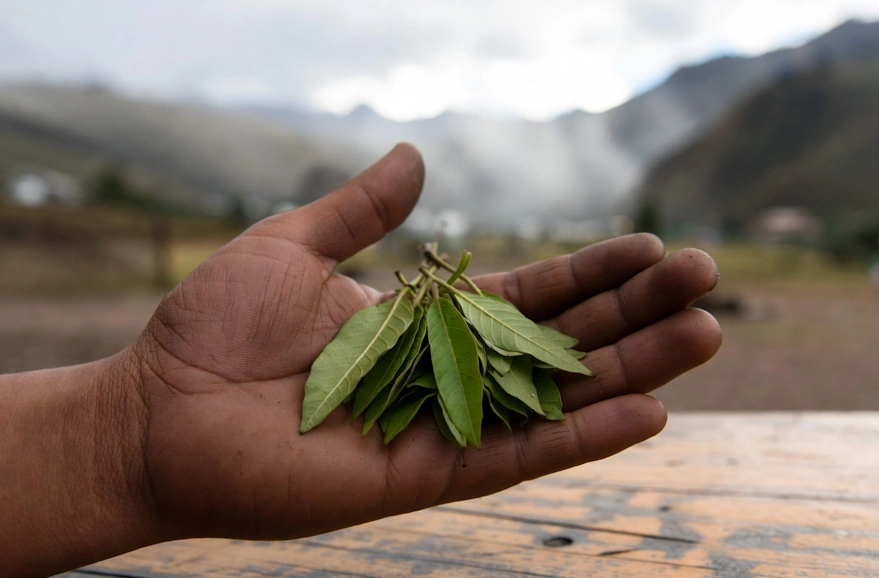
Hand holding history
The Coca Leaf Through Time
Evidence from Andean sites dates coca leaf use to over 8,000 years ago. Early communities chewed leaves to maintain stamina during intensive labor on steep slopes. This approach sustained farming and extended journeys in prehistory.
As societies grew, the leaf assumed greater roles. Runners in relay systems depended on it for endurance. European accounts from the 1500s describe coca leaf chewing in ceremonies and fieldwork. Distribution networks moved dried supplies between valleys.
By the 19th century, chemists extracted alkaloids from the coca leaf, opening pharmaceutical paths. Traditional consumption, however, centered on whole-leaf vitality.

Heretage
Roots in Andean Culture
In Andean settings, the coca leaf links people to land and lineage. Communities treat it as a natural offering, exchanged in group settings or private moments. Selection of leaves often follows established customs.
Quechua terminology layers meanings of nourishment and sanctity onto the word for coca. Festivals incorporate leaves as markers of courtesy. Receiving them signals acceptance.
Practices shift with time. Many now brew coca leaf tea amid contemporary habits, keeping the custom relevant.

Coca ceremony
Coca in Inca Society
The Inca system valued the coca leaf as a managed asset. Leaders oversaw large growing areas and allocated leaves to workers on public projects. This bolstered output across roads and structures.
Social events included chewing for all classes, encouraging exchange after effort. It served as an early form of shared respite.
Ceremonial uses involved reading leaf patterns for guidance. Such acts reinforced ties to environment and community.
Clash with Colonial Faith
Spanish entry sparked opposition to the coca leaf. Church figures tied coca leaf chewing to non-Christian beliefs and urged eradication. Early measures burned plantations to advance religious goals.
Economic needs countered ideology. Labor productivity dropped without leaves, prompting limited approvals. Certain observers likened it to sacramental wine.
Policy wavered over decades. Condemnation from altars coexisted with revenue from taxes on cultivation.

Spanish priest burning a Coca plantation
The Coca Leaf Now
The coca leaf persists legally for customary purposes in Bolivia, Peru, and neighboring areas. Markets stock fresh piles for routine purchase.
Current forms range from coca leaf liqueur to coca leaf extract in controlled products. Officials defend its heritage against broader restrictions. Artisanal goods include leaf-based flours or sweets.
Global pacts create hurdles for growers. Efforts highlight differences between traditional and refined uses.
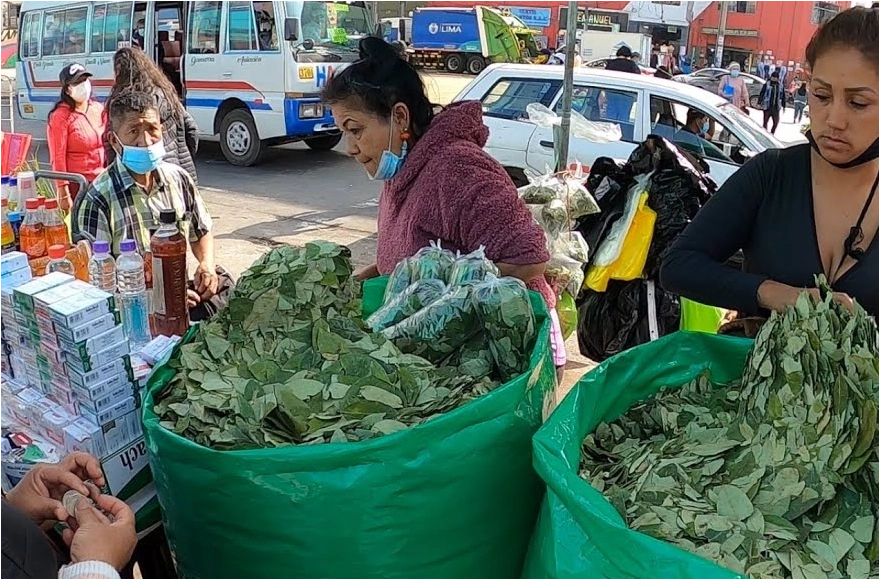
Coca been sold on a street market
Ways to Use Coca Leaves
Standard coca leaf chewing places leaves inside the cheek with an alkaline activator. Release occurs slowly, reducing appetite and tiredness.
Coca leaf tea forms by brief infusion of dried leaves in heated water. The drink warms and settles the system.
Regional variations exist. Leaves ground for cooking or distilled into coca leaf liqueur appear in select contexts.
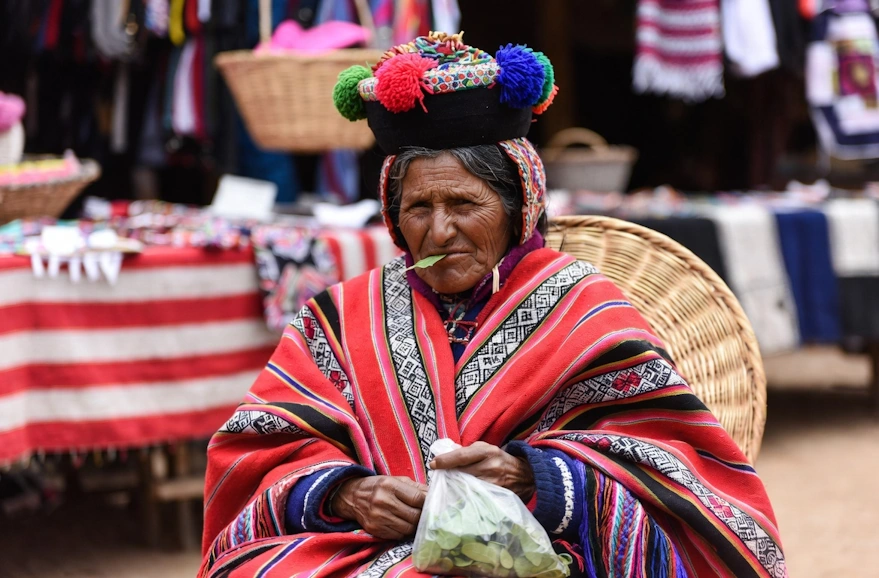
Chewing Coca leaves
Daily Coca Habits
Andean schedules integrate the coca leaf naturally. Field hands start days with a portion. Herders divide supplies during pauses.
Plaza sellers grade bundles by appearance. Freshness guides choice.
Children learn measured exposure, emphasizing plant respect.
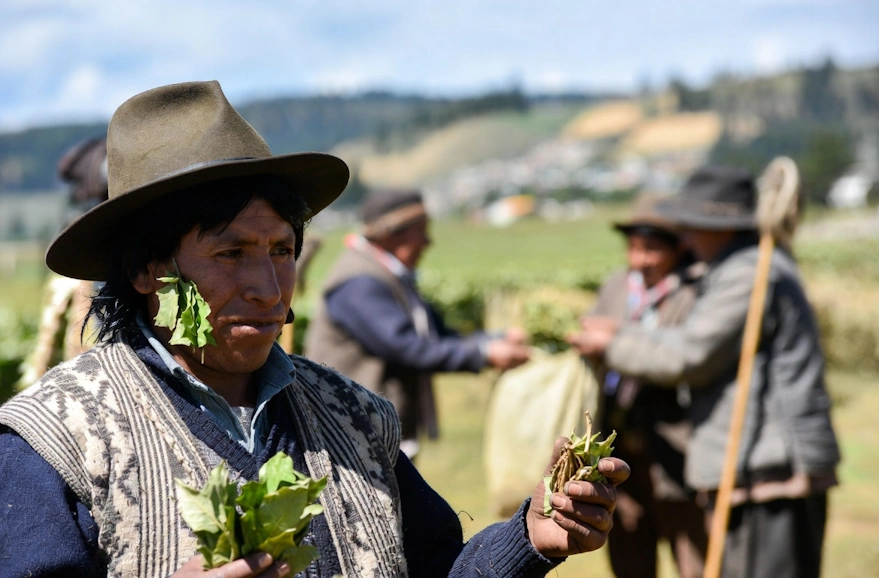
Buying/selling coca leaves
Healing with Coca
Local remedies apply the coca leaf to gastrointestinal issues, headaches, and joint stiffness. Coca leaf tea offers soothing relief.
Research confirms mild numbing and inflammation reduction. It functions as one element in broader care.
Altitude effects lessen with leaf use, stabilizing respiration.
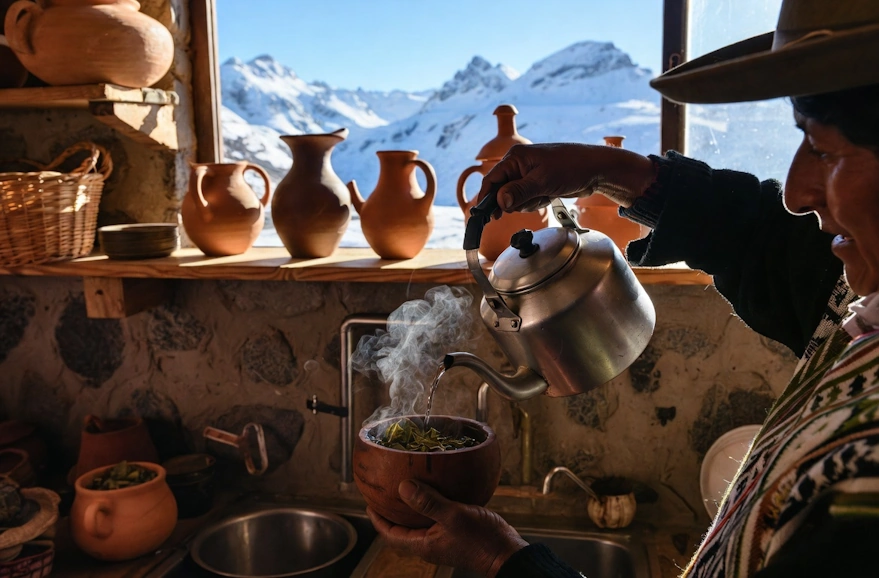
Hot cup of Coca tea
Coca in Folk Medicine
External coca leaf wraps ease muscle tension. This technique relies on direct contact.
Mixtures with other plants target coughs or low energy in remote zones.
Validated traditions enter some modern clinics.
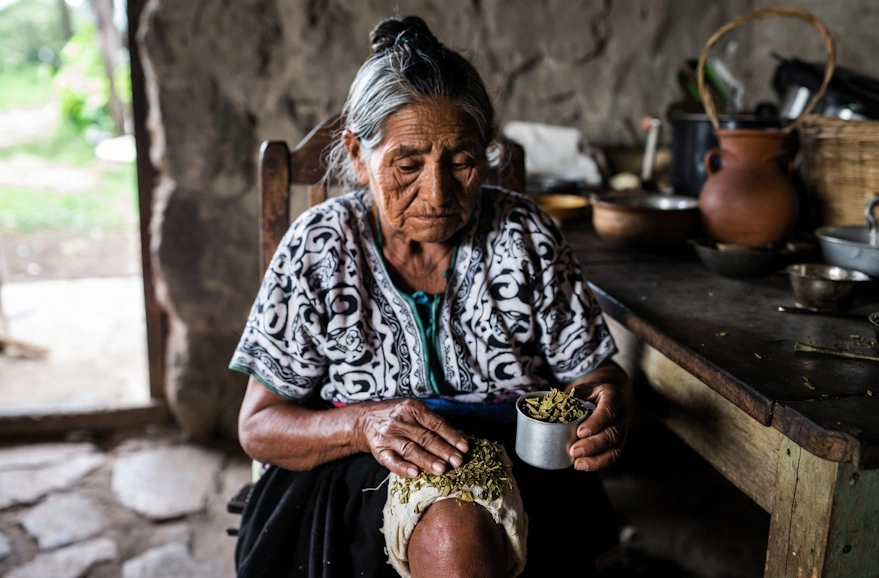
Coca leaf medicine
What is Inside a Coca Leaf
The coca leaf contains varied compounds. Alkaloids form a minor part, joined by vitamins A, B-group, and C. Minerals supply calcium and iron.
Oils provide scent; flavonoids offer protection. Nutrition hides in plain sight.
| Component | Primary Function | Additional Details |
|---|---|---|
| Alkaloids | Mild stimulation and numbing | Trace levels in intact leaves |
| Vitamins | Immune and metabolic support | Elevated riboflavin |
| Minerals | Structural and energy roles | Magnesium included |
| Fiber | Digestive assistance | From leaf matrix |
Science on Coca Properties
Data show the coca leaf improves oxygen handling at elevation. Appetite control occurs without agitation.
Antioxidant strength nears that of common infusions. Lab results indicate bacterial resistance.
Intact leaf effects diverge from purified versions.
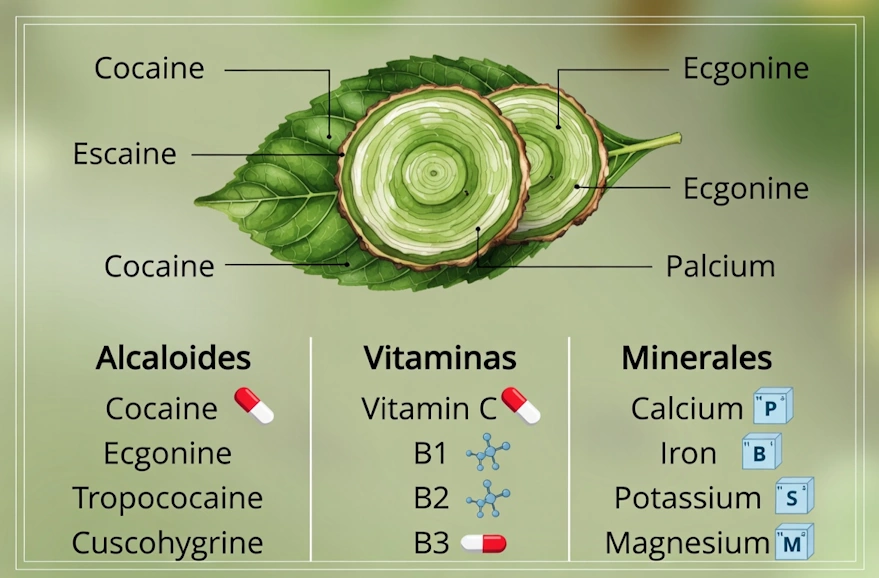
Components of Coca leaf
Coca Against Altitude Sickness
High terrain triggers nausea, pain, and vertigo. The coca leaf adjusts blood flow.
Chewing or coca leaf tea eases breathing. Preference leans local.
Mechanism ties to biology, not lore.
Coca in Spiritual Rites
Shamans position the coca leaf for spirit dialogue. Scattered leaves yield patterns.
Earth-honoring rites feature coca as conduit.
Current ceremonies retain these links.
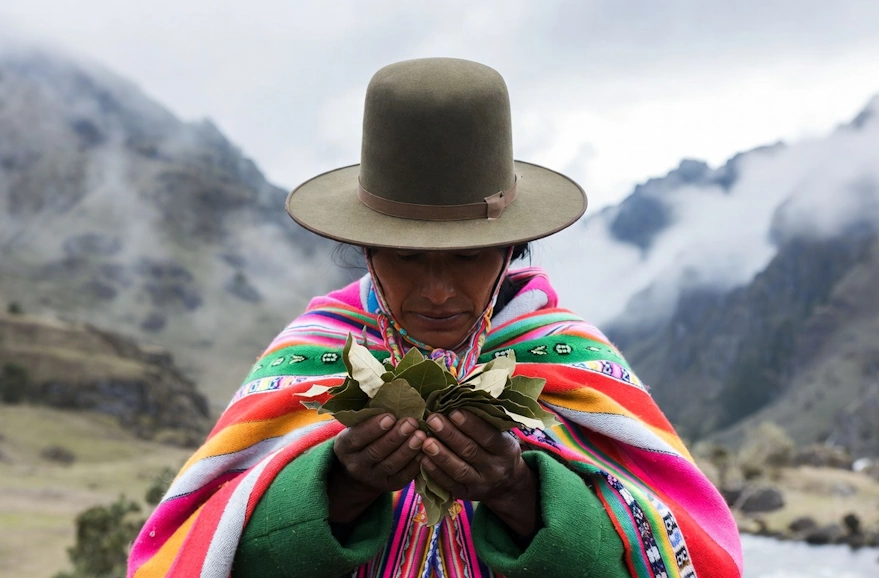
Mamacha reading the Coca leaf | Belcheri Travel
Facts Behind the Coca Leaf
Examination reveals low-risk alkaloid delivery in custom. Habit formation ties to processing.
Performance and dental gains appear in studies.
Views adjust with accumulating proof.

Tab of the Coca leaf
Clearing Coca Myths
- Misconception: Identical to cocaine / Reality: Demands separation.
- Misconception: Chewing causes intoxication / Reality: Subtle wakefulness.
- Misconception: Inherently risky / Reality: Safe within norms.
- Misconception: Illegal worldwide / Reality: Allowed culturally in source lands.
- Misconception: Empty calories / Reality: Rich micronutrients.
The coca leaf reveals layers of utility and meaning across eras. From field support to ritual depth, it endures as Andean essence. Knowledge of its scope enriches understanding of the region.
FAQ Section
What are the main coca leaf benefits?
- The coca leaf aids energy maintenance, digestion, and elevation adaptation. Customary amounts supply gentle lift and nutrients.
Is coca leaf chewing addictive?
- Traditional coca leaf chewing avoids dependency through gradual release.
How do you make coca leaf tea?
- Place dried leaves in hot water for several minutes, then strain.
Can coca leaf extract help with pain?
- It numbs locally and curbs swelling in topical or infused forms.
What is coca leaf liqueur?
- An infused spirit with herbal notes, used sparingly in origin areas.


