
Exploring the Sacred Valley: Peru’s Quiet Wonder
Discovering the Sacred Valley: Peru’s Quiet Soul That Stays With You
Machu Picchu grabs every headline, and yeah, it’s earned that spotlight. The first time I crested that final ridge and saw it spread out below, my stomach actually flipped. Unreal place. But here’s the odd thing, months later, when Peru drifts into my head uninvited, it’s rarely the citadel that shows up first. More often it’s the Sacred Valley. That long, slow curve of land hugging the Urubamba River down from Cusco. It doesn’t shout. It just settles in, like an old song you didn’t realize you knew by heart.
If you’re thinking about Peru or just browsing photos late at night, give the Sacred Valley extra days. I planned a quick stop before Machu Picchu, but it stole my schedule. Added nights in Urubamba for slow mornings with coca tea and mountain light. I’ll share history that still gives me chills, spots where I lost afternoons wandering, easy chats with locals that made it feel alive, and practical bits like how the Sacred Valley altitude kept headaches away while exploring Cusco and the Sacred Valley of the Incas.
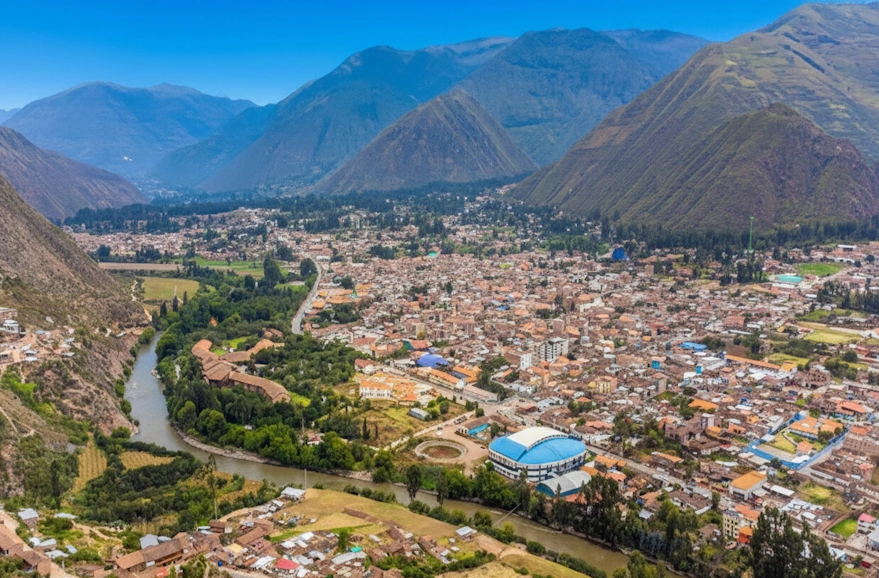
Cusco Beyond Machu Picchu
I remember driving down from Cusco one morning, windows cracked, cold highland air turning warmer by the minute. The road twisted, pines thinned, and suddenly the valley floor opened wide, green and bright, river glinting like someone had spilled mercury. Fields everywhere, terraces stepping up the hills in these perfect, almost lazy waves. Every so often an old Inca wall would pop up right in the middle of a modern potato patch, stones fitted so tight you couldn’t slip a coin between them. No museum rope. No sign. Just there, doing its thing after five hundred years.
The Incas weren’t lucky finding this place. They were sharp. Up in Cusco the nights bite hard, frost kills tender crops quick. Down here in the Sacred Valley of the Incas the climate softens, nights stay milder, and they could grow those big, sweet maize kernels that made the best chicha. You’d see chicha everywhere, cloudy yellow in plastic buckets at markets, poured into ceremonies, shared after a long day’s work. They stacked the extra harvest in those round colcas on the hillsides, little stone storehouses you still spot like forgotten beehives. Some are crumbling now, vines sneaking in, but plenty stand solid.
The Sacred Valley altitude hangs mostly between 9,200 and 9,800 feet along the river. Cusco sits way up over 11,000. A lot of folks now start their trip right here, sleeping a couple nights in Urubamba or Pisac before heading higher. Best decision I made on my last visit. No pounding headaches, no dizzy spells. Just slow mornings with coffee and mountain light easing in.
Terraces are the thing that get me every time. They sweep up impossible slopes in these long, curving lines that look almost hand-drawn. Farmers still work heaps of them the old way, oxen pulling wooden plows, kids running along the edges. Water runs down stone canals laid out centuries back, quiet and steady, feeding rows of potatoes, quinoa, fava beans, tarwi. You smell wet earth, eucalyptus drifting from groves someone planted long ago. Far off, the snow peaks catch whatever sun is left and throw it back.
Late afternoons around Urubamba were my favorite. Sun dropping behind the western ridge and light turning thick. Shadows stretching long across terrace steps. River talking constant in the background. I’d sit on some low wall with a cold Cusqueña beer or a cup of coca tea, watching clouds shift over the peaks, feeling the day wind down. Nothing planned. No rush. Just that slow exhale the valley seems to invite. Those moments don’t photograph well, but they stick harder than any postcard view.
Sometimes I’d wander into a small village market, not the big tourist ones, just locals trading. Old women in layered skirts and tall hats sorting potatoes into piles by variety, hundreds of kinds, purple, yellow, red, tiny ones no bigger than marbles. Someone grilling trout pulled from the river that morning. Fresh cheese wrapped in banana leaves. A guy selling bundles of muña and coca for tea. You buy a little, chat in broken Spanish and smiles, and suddenly the afternoon is gone.
It’s funny how the valley doesn’t try to impress. It just is. And somehow that makes it harder to leave behind.
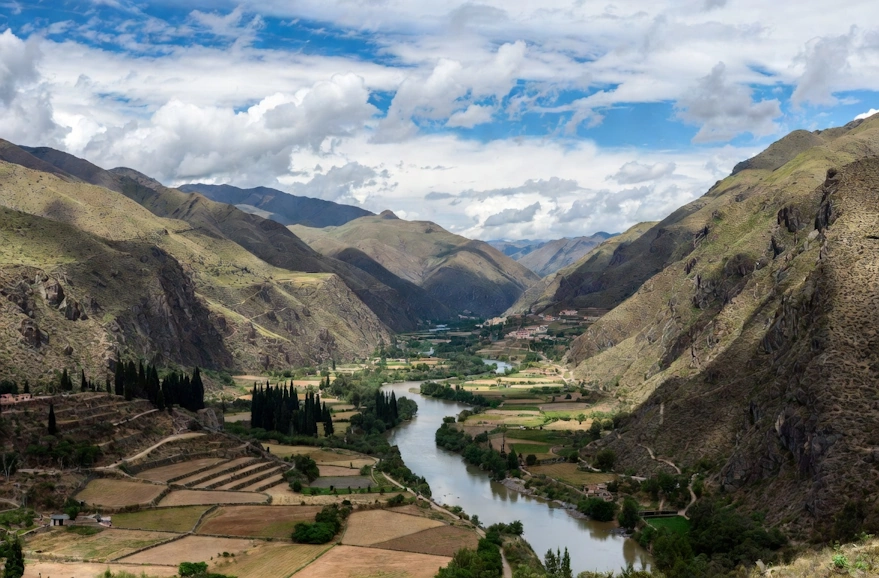
The Sacred Valley: A Hub of Natural Beauty and Inca Ruins
Leave Cusco in the morning and the road drops fast. Pines give way to open views. The valley floor appears suddenly, green and broad. River flashes silver. Terraces rise in perfect rows. The Incas built heavy here because the land gave back heavy.
Royal estates once dotted quieter corners. Emperors escaped the capital’s noise. Defensive sites watched narrow passes. Storage buildings held enough to feed armies or survive dry years. Lower elevation meant reliable seasons. Maize flourished. Empire stayed strong.
Stonework impresses without trying. Walls fit tight, no mortar needed. Aqueducts carry water across valleys on arches that defy time. Much of the system still irrigates fields. Nature never fights the human touch. It partners.
Birds wheel overhead constantly. Condors sometimes. Herons stalk river edges. Falcons ride thermals. The whole place hums at a slower rhythm.
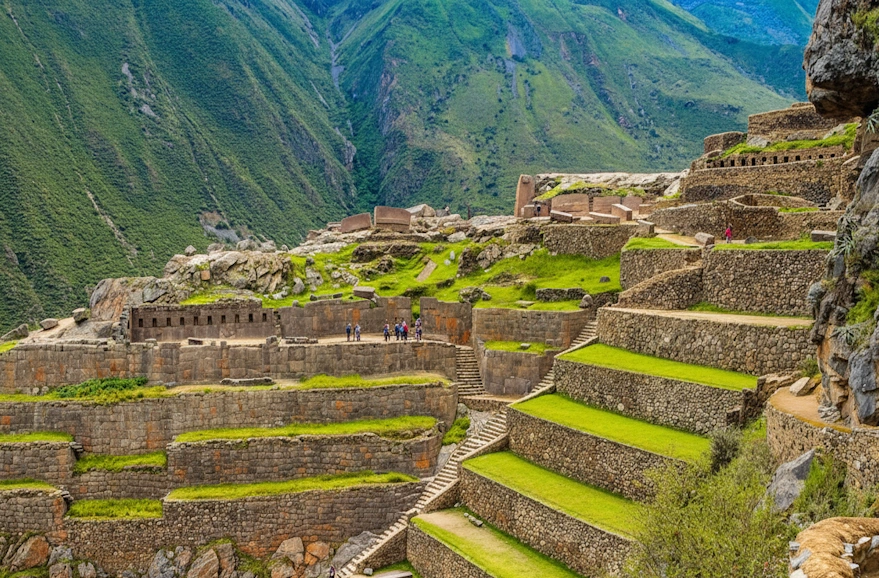
What is the Sacred Valley?
The valley follows the Urubamba River from Pisac eastward to Ollantaytambo and a bit beyond, roughly sixty miles of prime land. The Incas called the river Willkamayu, sacred river, because its path echoed the Milky Way they watched at night.
Farms cover most of it now, just like then. Temples exist but don’t dominate. The real holiness lived in abundance. Different heights packed into one valley created natural zones for testing crops from coast, highlands, even jungle edges. Moray’s huge sunken circles acted like living laboratories. Each terrace ring stayed a few degrees cooler than the one above. Perfect for breeding hardier strains of potatoes or maize.
Life moves over the history without pausing. A tractor rumbles past a wall from the 1400s. Schoolkids chase each other around foundations older than Europe knew the Americas. Nothing feels staged.
History and Importance
People farmed the valley long before the Incas arrived. The soil simply invited it. When the empire surged forward in the mid 1300s under leaders like Pachacutec, they poured resources in. Trails became proper roads. Storage sites multiplied. Irrigation turned steep hills productive.
Ollantaytambo stood firm longest during the Spanish invasion. Manco Inca opened water channels, flooded the plain below the fortress, bogged down horses, then rained stones from terraces above. Rare moment when invaders backed off, even briefly. The valley also funneled trade from lowland jungles, bringing coca leaves, feathers, fruits the highlands lacked.
Food security built everything else. Workers stayed fed while carving stones for bigger projects. Traveling back and forth between Cusco and the Sacred Valley of the Incas shows the planning in every curve of canal, every placement of terrace wall.
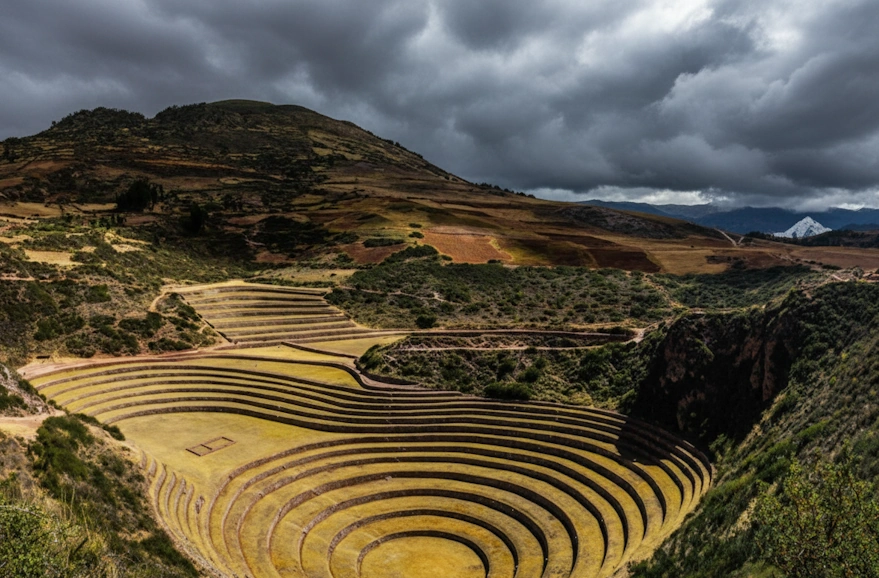
Hidden Cultural Wonders You Shouldn’t Miss
Well known sites pull visitors naturally. Pisac ruins climb high above town, temples and residences carved into cliffs, astronomical sight lines built in. Views stretch forever. The Sunday market below spills color and noise as farmers and weavers bring goods from miles around.
Ollantaytambo keeps the old urban plan alive. Narrow streets follow original grid. Stone canals carry water openly beside cobblestones. People live inside history without noticing. The fortress above moved stones weighing dozens of tons from quarries across the river. Logistics still baffle engineers.
Moray drops deep in concentric rings, temperature shifting steadily downward. Ideal setup for agricultural trials. Maras nearby covers a hillside in thousands of small salt evaporation ponds. One underground saline spring feeds them all. Local families maintain plots passed down generations, scraping salt by hand in the old cooperative way.
Smaller spots reward wandering. Chinchero sits higher, famous for weaving cooperatives where natural dyes produce intense colors. Colonial church rests directly on Inca foundations. Pinkuylluna granaries climb the hill opposite Ollantaytambo, short steep hike for views most skip.
Favorite corners include
Pisac:
- Archaeological park and bustling weekly market
Ollantaytambo:
- Fortress integrated with living town and working water system
Moray:
- Experimental terraces quiet and thought provoking
Maras salt mines:
- Shimmering white against green slopes
Chinchero:
- Weaving centers and high plateau feel
Lesser trails:
- Isolated storehouses or aqueduct sections
Time without tight schedules lets the valley unfold naturally.
Festivals and Living Culture in the Sacred Valley
Traditions run strong and unbroken. Festivals arrive loud and colorful, blending Andean roots with Catholic calendar. June brings Lord of Qoyllur Rit’i pilgrimages or Inti Raymi sun honoring in Cusco with echoes down valley. Music spills everywhere. Dancing lasts days.
Smaller community events pop up year round. Villages honor patron saints or earth itself with processions up mountain paths. Brass bands mix with traditional flutes. Costumes layer meaning. Food appears endless: roasted corn, dozens of potato types, guinea pig if offered, chicha flowing freely.
Weaving stays central. Many villages specialize. Women set up backstrap looms outside homes. Wool comes dyed from cochineal insects for red, various plants for yellows, greens, blues. Patterns tell stories of rivers, mountains, family lines. Watching the work unfold over conversation shows the patience involved.
Markets remain the pulse. Stalls heap with potato varieties numbering hundreds. Quinoa in red, black, white. Fresh trout from the river. Medicinal herbs bundled tight. Meals taste of place because ingredients traveled minutes, not days.
Sacred Valley hotels suit different moods. Some sit right in small towns like Pisac or Urubamba, family run and simple. Others spread farther out with gardens full of native flowers and wide views. Mornings start slow with mountain light pouring in. Roosters call. River keeps its steady talk.
The Sacred Valley grounds everything grander in Peru. It fed the empire. Innovated quietly. Keeps customs breathing today. Days spent walking village streets, hiking short trails, sharing meals or just sitting with the views build something lasting. The valley often turns into the part of the trip people remember most fondly.
Frequently Asked Questions
What is the Sacred Valley?
- Long fertile stretch along the Urubamba River from Pisac to Ollantaytambo where Incas produced food on massive scale and built key centers, lower and warmer than Cusco.
Why is it called the Sacred Valley of the Incas?
- River carried holy status as earthly Milky Way while valley grew maize essential for ceremonies and empire sustenance.
What is the Sacred Valley altitude?
- Valley floor sits generally 9,200 to 9,800 feet, noticeably easier than Cusco’s 11,150 for adjusting to elevation.
How does it connect to Cusco and Machu Picchu?
- Roughly one hour drive downhill from Cusco with Ollantaytambo serving main train station for Machu Picchu journeys.
What kinds of Sacred Valley hotels exist?
- Range includes small family guesthouses in villages and larger properties set back with gardens and panoramic views.
What happens on a Sacred Valley tour?
- Typical full day visits Pisac ruins and market, Ollantaytambo fortress, Moray terraces, Maras salt mines though spreading across multiple days allows slower pace and deeper feel.


