
The Coca Leaf: A Living Legacy of the Andes
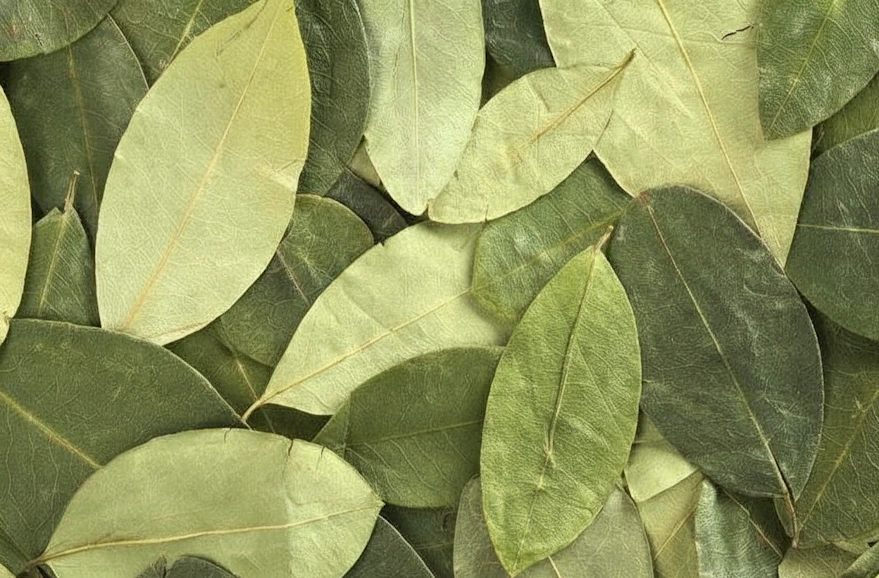
In the high Andes, where the air is thin and the landscape seems to touch the sky, there’s a plant that has accompanied communities since time immemorial. I’m talking about the coca leaf, that small green leaf which, for many of us, is part of everyday life: a warm mate on a cold morning, a handful for a long journey, or a gesture of welcome when someone visits. It’s not just a plant; it’s a bridge to our ancestors, a natural remedy, and a symbol of who we are. In this article, I want to share what I’ve learned living close to these traditions, without academic pretensions, just with the respect this sacred leaf deserves.
Historical Origins
The history of the coca leaf stretches back into the deep past of the Andes. Archaeological evidence shows it was already being chewed more than 8,000 years ago in regions like Ecuador and Peru. Ancient cultures such as the Moche and Nazca depicted it in ceramics and drawings, highlighting its importance from pre-Hispanic times.
With the Incas, coca gained a special place. It was considered a divine gift, linked to Mama Coca or Cocamama in legends. An old story tells of a beautiful woman who was cut in half and buried, and from her body sprouted the plant that gives strength and comfort. The Incas used it in rituals, offerings to the Sun, and as a medium of exchange. Not everyone had access; it was a privilege for the elite, though it spread to workers to endure long days.
During the colonial period, the Spanish first condemned it as “the devil’s work,” but soon saw its value: it boosted productivity in the Potosí mines. Coca trade became a huge business, and its cultivation expanded. Today, we know its domestication happened in the yungas, those warm zones between jungle and mountain where the climate is perfect for it.
Cultural and Social Importance
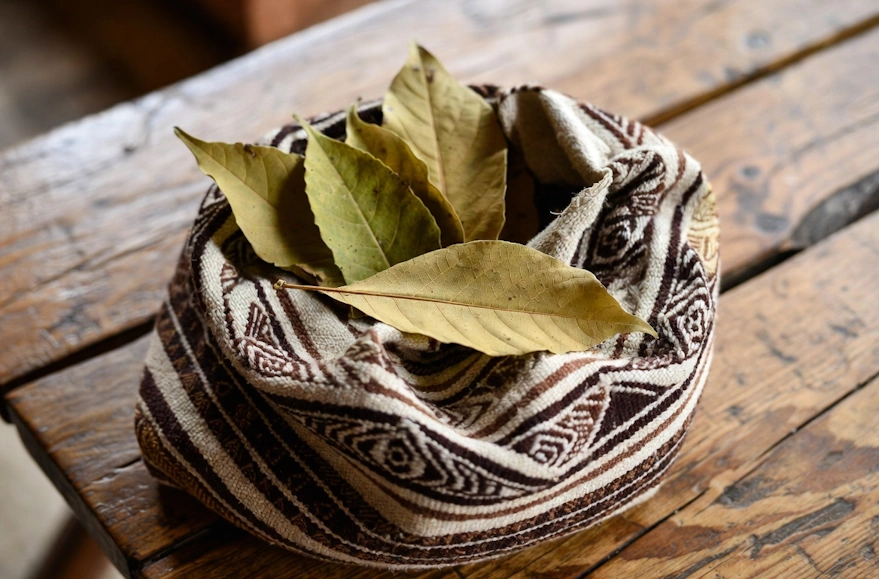
In the Andean worldview, the coca leaf is far more than a plant: it’s a sacred element that connects humans to Pachamama, the apus (mountain spirits), and the ancestors. The k’intu—a small bundle of three perfect leaves—represents the three worlds: Hanan Pacha (the upper world), Kay Pacha (this world), and Uku Pacha (the lower world). Offering coca is an act of reciprocity, of ayni, that strengthens community ties.
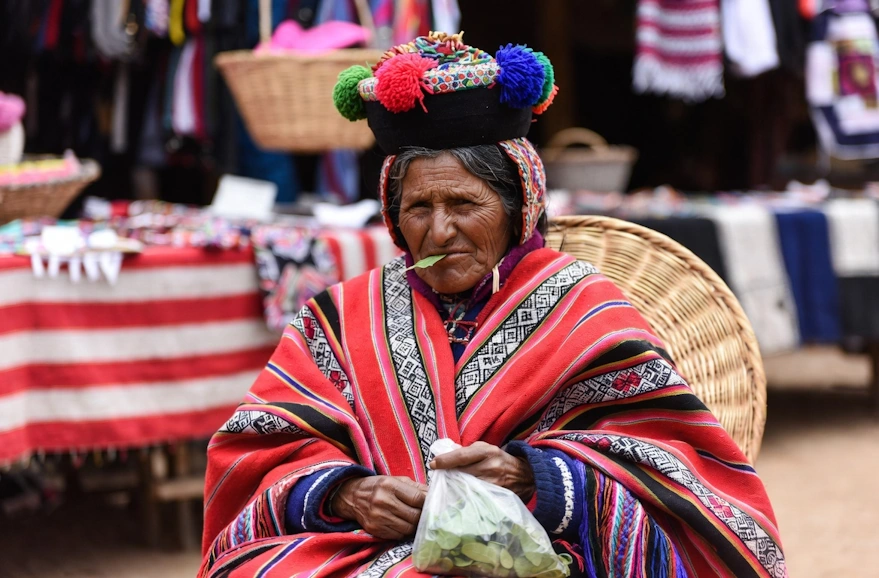
In Quechua and Aymara communities, carrying a chuspa (pouch) full of leaves is as natural as breathing. It’s shared in gatherings, collective work, or ceremonies: baptisms, weddings, payments to the earth. It’s a symbol of hospitality and respect. Without it, many traditions would lose their essence. In Bolivia and Peru, it’s recognized as cultural heritage, protecting its ancestral use against external stigmas.
Traditional and Modern Uses
Traditionally, acullico or chaccado is the most common way: a bolus is formed with selected leaves and a bit of llipta (alkaline ash) to release its properties. It helps combat soroche (altitude sickness), hunger, cold, and fatigue at high elevations. Another use is coca mate, a warm infusion that soothes the stomach and provides gentle energy.
Today, these uses remain alive in rural areas and cities alike. But it has also evolved: there are coca flours to enrich foods, candies, craft beers, or cosmetics. In natural medicine, it’s used for heavy digestion, pain relief, or as a nutritional supplement. In urban areas, young people incorporate it in new ways, though always rooted in the ancestral. Products like teas or extracts are legally sold in local markets, supporting family economies.
The Simple Science Behind It
The coca leaf contains 14 natural alkaloids, including a small amount of cocaine (less than 1%), but in combination with other compounds that balance its effects. Studies, such as those from Harvard in the 1970s, show that 100 grams of leaf cover daily needs of calcium, iron, phosphorus, and vitamins A, B, and E. It’s rich in protein and fiber, acting as a superfood for high-altitude diets.
Scientifically, it aids oxygenation at altitude, stabilizes blood sugar, and has analgesic and digestive properties. It’s not addictive in its natural form; chewing releases alkaloids slowly, without intense euphoria. Organizations like the WHO recognize the differences from isolated cocaine, though the stigma lingers.
Myths vs. Realities
One of the most common myths is that the coca leaf is the same as cocaine. Reality: they’re worlds apart. Cocaine is an alkaloid extracted and chemically concentrated, highly addictive. The natural leaf, chewed or infused, does not cause strong physical or psychological dependence; studies confirm this in Andean populations.
Another myth: it causes addiction or serious harm. In truth, traditional use is benign, comparable to coffee. It helps with fatigue and altitude sickness without long-term negative effects. The stigma stems from the 1961 international prohibition, which ignored ancestral uses. Andean countries are fighting to declassify it, recognizing its cultural value.
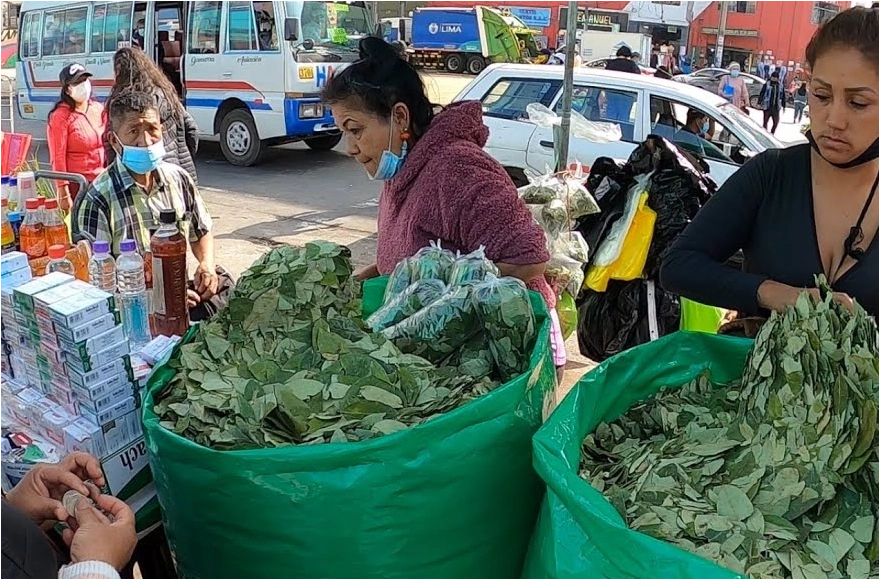
Coca been sold on a street market
Current Impact
Today, the coca leaf is an economic pillar in Bolivia and Peru, where traditional cultivation and trade are legal. Bolivia allows up to 22,000 hectares for licit uses, though surpluses fuel debates. In Peru, illegal crops are eradicated, but ancestral ones are protected.
Internationally, the 1961 Convention strictly controls it, limiting exports. Bolivia achieved an exception for internal acullico in 2013, but global trade remains restricted. There are efforts to industrialize it (flours, teas) and export legally, benefiting communities. However, its link to drug trafficking complicates everything, affecting innocent producers.
A Reflective Conclusion
Looking at the coca leaf, I see a reflection of our Andean resilience. It has survived conquests, bans, and misunderstandings, remaining an ally in daily life. In a fast-moving world, it reminds us of the importance of reciprocity with nature, respect for the ancestral, and the search for balance. I hope more people come to understand its true value, beyond prejudices, so it continues to thrive in our mountains and hearts.
Frequently Asked Questions (FAQ)
Is the coca leaf addictive? No, in its natural form. Chewing creates a cultural habit, like coffee, but not strong physical dependence. Studies show it doesn’t produce the addictive effects of purified cocaine.
Does it really help with altitude sickness? Yes, it’s one of its best-known uses. It releases alkaloids that improve oxygenation and reduce symptoms like headaches or nausea.
Is it legal to consume outside the Andes? It depends on the country. In Bolivia and Peru, yes for traditional uses. Internationally, it’s controlled; taking it elsewhere can be illegal.
Does it have nutritional benefits? Absolutely. It’s rich in minerals and vitamins, serving as a natural supplement, especially in high-altitude diets.
Why is it banned in some places? Because of its association with cocaine. But Andean movements seek to recognize its legitimate cultural and medicinal uses.
If you have more questions or experiences with the coca leaf, feel free to share in the comments! It’s part of our shared identity.


