
Pollo a la Brasa : Peruvian Cuisine
You don’t get good pollo a la brasa. It doesn’t seek you. For me, it was a Tuesday — not even a Sunday! — in a neighborhood of La Victoria they tell tourists to avoid. The atmosphere was fluorescent and the slippery tile floor was sticky, and there was a poster of a 1998 soccer team. But the air? Compacted by the scent of burning quebracho wood and the caramelization of skin. The first bite wasn’t just delicious—it sounded right. A deep, resonant crrrrk that seemed to reverberate in your jaw. That’s how you know. If the skin doesn’t sing, get out.
This isn’t food you analyze. It’s food you experience. It’s the grease on your chin, the pile of napkins, the argument over the last crispy wing. It’s Peru on a platter.
A Story That’s Probably Half True (But Who Cares?)
They’ll say that began with a Swiss farmer in the 50s. Sure. Roger Schuler and his rotisserie. But my friend’s abuelo (grandfather) in Chorrillos is positively certain his uncle was slow-roasting chickens over pisco grapevine clippings ten years prior. Probably the truth lies somewhere between, and it’s messy. Like most great Peruvian things, it is a criollo invention – the fusion of immigrant resourcefulness and local products that converged in a postwar Lima starving for its own modern identity.
The real history isn’t in a history book. It’s in the stubborn pride of the pollero in Ate who still uses his grandfather’s clay oven, or in the vendor in Huancayo who swears the altitude makes his chicken taste better. It’s the oral history, shared with a side of fries.
The Anatomy of a Perfect Bite
Recipes are irrelevant. It’s about ratios and textures. Here’s what you’re chasing:
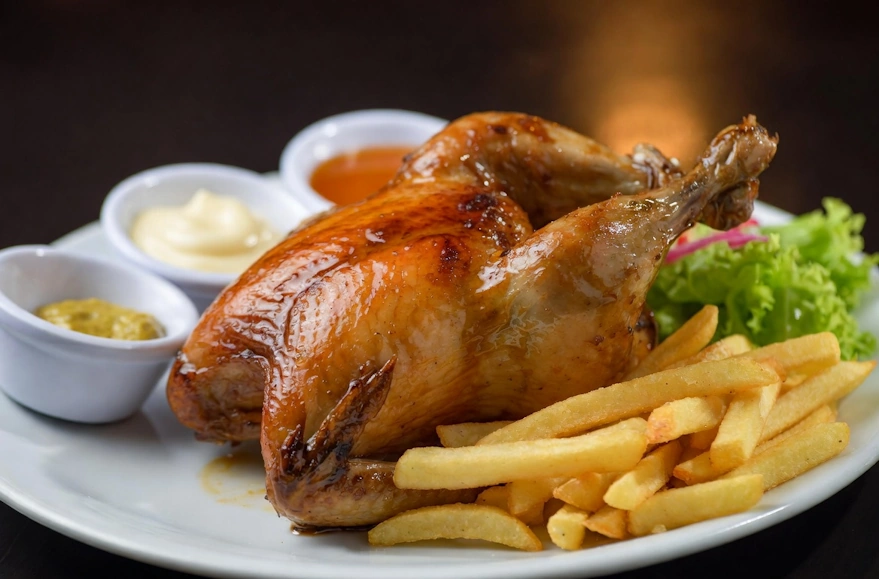
- Layer 1: The Skin. It has to be a geological event. A plate of flavor, a tectonic plate, thin and brittle, mahogany in colour from hours in the marinade, not from burning. It should shatter rather than crunch.
- Layer 2: The Fat. Just below. Rendered, golden, and smokes of garlic and cumin. It is what transports the smoke from the burning coals into your meat.
- Layer 3: The Meat. The thigh pulls away in thick juicy strands. The breast should be sufficiently moist to make you reconsider everything you know about chicken breast.
Getting this result is alchemy rather than cooking. You need a marinade that functions more like a brine and reaches deep. I saw a cook in Surquillo slather his chickens with a paste made of ají panca, smashed garlic and a little chicha de jora (fermented corn beer). “The sugars,” he winked, “they attract the fire.” He let them sit, naked, in the walk-in freezer overnight. “The skin dries out. That way it’s crisper.” Simple. Genius.
The Sacred and the Profane: The Sides
The chicken is the sermon, but the sides are the choir.
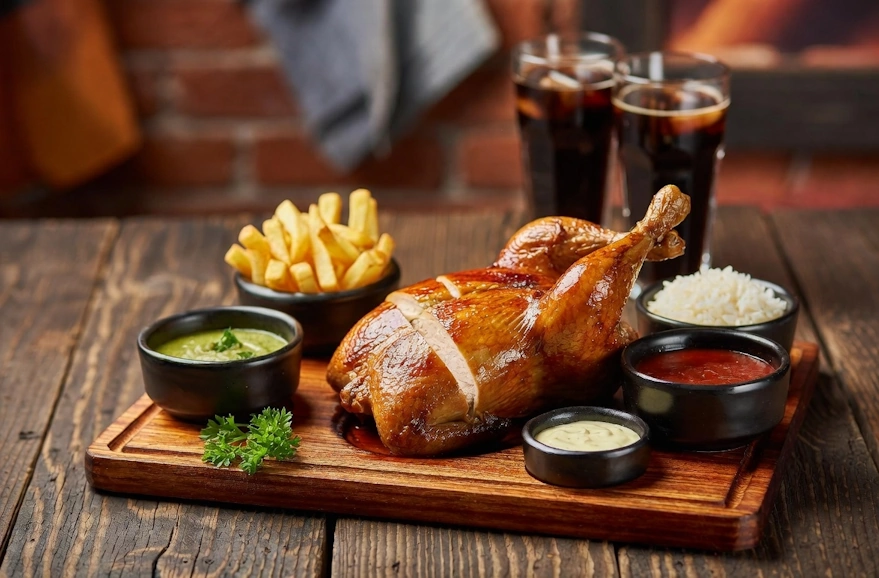
- The Fries: Must be bumpy. Uniformity is the foe of soul. They should be a combination of crispy shards, soft pillowy centers and the occasional nearly-burnt one, which is the cook’s secret gift to you.
- The Crema de Ají: That’s your trial by fire. Is it just pureed yellow chili? Or did they also fry the chili in oil with hierba santa before? Can you really taste the texture of the breadcrumb thickener? The real thing is a little gritty, with a heat that builds in the back of your throat, rather than the front.
- The Ensalada Criolla: This isn’t salad. It’s punctuation. The sharp vinegar and red onion cut through the fat. It’s a reset button between bites.
You eat with your hands. You mix the sauces. You drag a fry through the ají and then through the mayo. You create your own perfect, chaotic bite every single time.
A Sunday Pilgrimage
Noon. The sun is high. The family is arguing about where to go. This is the ritual.
- For the Traditionalist: You go to La Granja Azul in Chaclacayo. It’s a drive. The place is a time capsule. The chickens are good, solid, reliable. You go for the ghost of the original, for the feeling of “this is where it started.”
- For the Purist: You find the unnamed spot with the handwritten menu and the line out the door. In Lince, it might be Pollería El Cortijo. In Breña, Don Tito. No frills. Just focused perfection. The walls are stained with decades of smoke. The owner knows his charcoal.
- For the Hedonist: You go to Pardos. Yes, it’s a chain. But their consistency is an art form. The skin is always crackling, the fries are always hot, the ají always has the same perfect kick. There’s no shame in it.
My personal vice? A place called El Alamo near the airport. The chicken is just excellent. But they serve it with these deep-fried rocoto peppers stuffed with cheese. It’s blasphemy. It’s glorious.
FAQs from the Frontlines
- Q: I’m in Lima for one day. Where do I go?
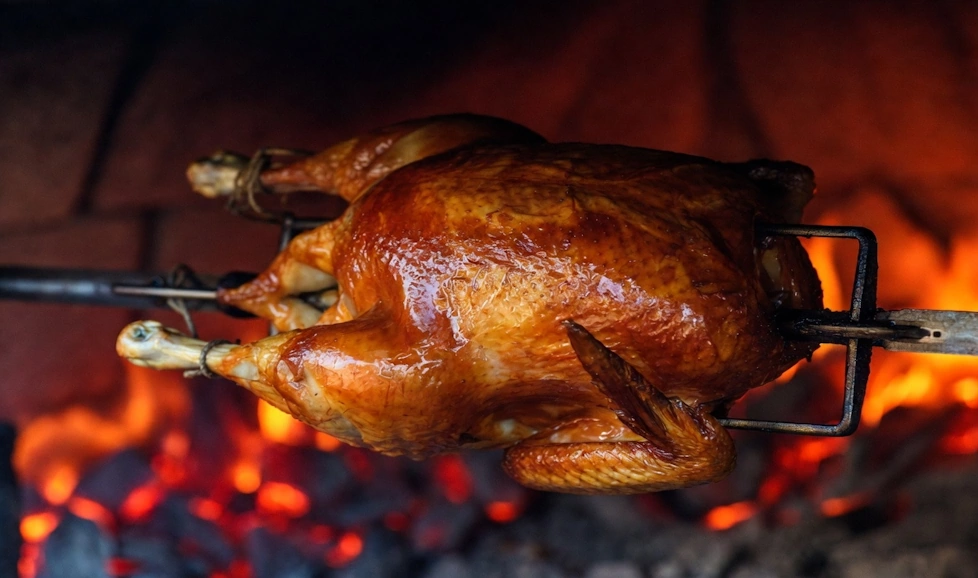
A: Don’t overthink it. Walk into any pollería that’s at least half full of locals at 1 PM. Point to the chicken turning in the window. Say, “Un cuarto, por favor, con todo.” You can’t go wrong. - Q: What’s the one thing I shouldn’t do?
A: Ask for ketchup. Just… don’t. - Q: Dark meat or white meat? meat white or dark?
A: It is a trick question. The right answer is a medio pollo (half chicken). Both, you get both. Act one: The white meat, juicy and full of flavor from the marinade. The rich and more forgiving dark meat, for the grand finale. - Q: Is it really a hangover cure?
A: The chicharrón (fried pork) is the official Peruvian hangover cure. Pollo a la brasa is more a hangover companion. It doesn’t cure you. Miser beats you down – it stays with you, and prettifies your misery.
The Last Napkin
You’re done. The plate is a battlefield of bones and smeared sauces. I could say: You’re full in a way that feels like contentment, not regret. Your fingers glisten. This is the moment.
It’s not a gourmet revelation. It is a primal satisfaction. It’s the food of waiting your turn, of shared tables, of a city that moves too fast but still stops for this. It’s the taste of a million Sunday afternoons, of victories celebrated and losses comforted.
You wipe your hands on the last paper napkin. It’s not enough. You’ll smell like smoke and spice for hours. A delicious ghost of a meal that will call you back long before next Sunday.
That’s pollo a la brasa.


