Category: Spirit of Peru

  • Cusco

    Cusco

    Cusco is located in the southern center of the Peruvian territory, it is divided between mountainous areas and the Amazon jungle. It is well-known for being the heart of the Tahuantinsuyu Empire, a considerable part of the Andes was controlled politically, religiously and administratively during the XV and XVI centuries. The city is a sample of the convergence of two completely different cultures, Andean and Hispanic, over the centuries achieved a cultural Syncretism embodied in the architecture of its buildings, customs, folklore, religious celebrations and art. The feeling is unspeakable, the mysticism that engulfs you from its history, getting full of energy, walking through remote places and enjoying the nightlife. The only thing you will crave is not to leave ever.

    WHAT MAKES CUSCO SO SPECIAL?


    Monuments

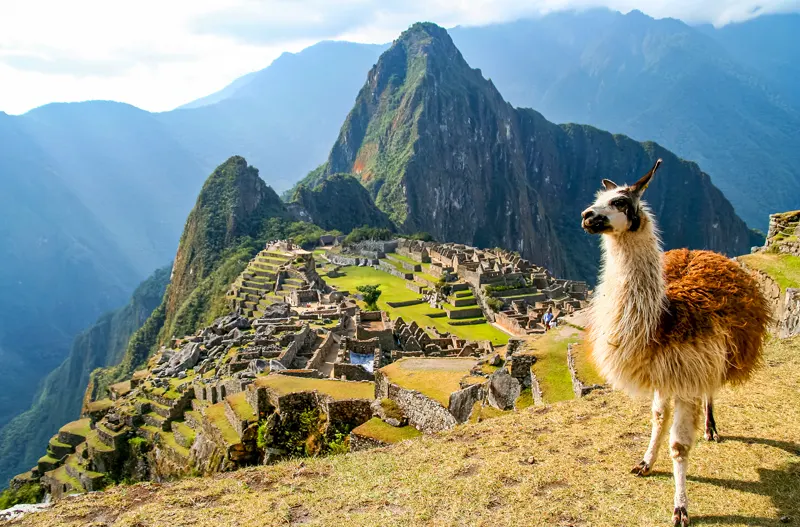
    This journey will connect you with the pre-Inca and Inca times, its monuments are perfect lacework of enormous stones without using any mortar that astounds the entire world. The must-see sites that you should not miss are: Sacsayhuaman, Q’enqo, Puka Pukara, Tambomachay, Pisaq, Ollantaytambo, Moray, Pikillaqta, Tipón, among others. And we cannot fail to mention one of the new seven wonders of the world, Machupicchu. This World Heritage Site was a political, administrative and religious center during the Tahuantinsuyu Empire. Its enclosures and the mountain range surrounding makes it a unique scenery that enfolds every person. On the other hand, the colonial and republican times are reflected in the facades of the old houses, nunneries, temples, museums, the detail of the door and window frames leave you breathless.

    Outdoor activities

    If you enjoy being in contact with nature and landscapes, you have many choices, you can choose to do ecotourism, hike the mountains surrounded by the different communities, particularly the Inca Trail of four or five days or the Short Inca Trail, release adrenaline doing active sports such as kayaking, rafting, mountain climbing, paragliding, cycling. Cusco delights you with endless activities and attractions to be discovered.

    Culture and folklore

    Cusco is characterized by maintaining and keeping practicing their customs since ancient times, and it can be appreciated in their traditions, clothing, food and typical beverages. It can be seen in the celebrations for Holy Week, the feast in honor of Taytacha de los Temblores (The Lord of the Earthquakes), considered the Sworn Patron Saint of the city. Another expression of major importance is the festival of the Inti Raymi, the celebration in honor of the sun god, the highest deity of the Incas. In August, the farmers perform a payment to the mother earth, as this could be the beginning of the new year in the Andes, among others. If you would like to live these experiences, plan your trip for these special dates.

    Kindness of the people of Cusco

    The Cusco man stands out for the good treatment given to people, this is reflected in his/her actions and coziness.

    Craftsmanship

    Handicraft in Cusco is a millennial labor, each handmade piece made in the workshops is a know-how passed down from generation to generation. It is an inheritance continuously enriched by the artisan’s imagination, it has a magical-religious or utilitarian value. It can be seen in textiles, using fibers of plants and animals such as alpaca and vicuna; ceramics, the potters make replicas of Inca and European artifacts; goldsmithing, they use gold and silver metals to make high-quality pieces and design; leather work; wood and stone carving; imagery and other works of art makes it one of the richest in Peru.

    Cuisine

    Cusco is a major destination in Peru, it is not only synonymous with archaeological sites, history, mysticism. It also has a wide variety of food, highlights its typical meals made with local products. You cannot miss tasting these traditional dishes such as roasted guinea pig or cuy al palo, chicharrón cusqueño, lechón (suckling pig), chiri uchu, chairo soup, among others. If you come to Cusco, and would like to get to know this marvelous place, do it by tasting its dishes.
  • Lima

    Lima

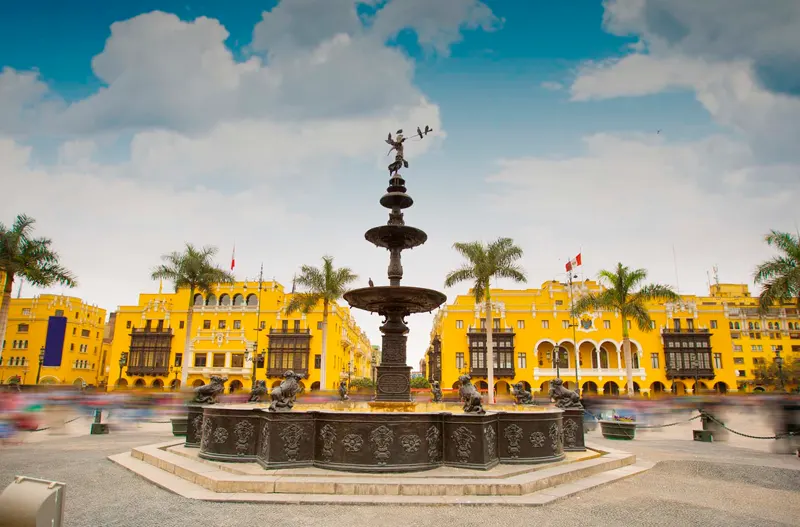
    Lima is located on the central coast of the country, is the only capital of South America with access to the Pacific Ocean. It was founded by Francisco Pizarro as the City of Kings in 1535, became the capital of the Viceroyalty of Peru, after the Independence it became the capital of the Republic.  Lima is one of the favorite cities for tourism, walking its streets is to admire its colonial architecture, modern districts and the legacy of pre-Hispanic cultures, as well as its varied and exquisite cuisine, which is why it should be your next destination to visit.

    WHAT MAKES LIMA SO SPECIAL?


    PRE-HISPANIC HERITAGE

    The legacy of the ancient inhabitants of Peru can be noted in the several ceremonial centers that are located in the city, standing out the Huaca Pucllana (Miraflores) and Huaca Huallamarca (San Isidro). Towards the south of Lima city is situated the Archaeological Sanctuary of Pachacamac, it was the main shrine of the central coast for over a thousand years. If you are looking to understand and get to know more about the history of Peru is through the museums, highlighting the Larco Museum, the National Museum of Archaeology and Anthropology, the Art Museum of Lima, among others.

    HISTORICAL CENTRE

    In 1991, its Historic Center was declared a Cultural Heritage of Humanity. The buildings such as temples, old houses, squares, wooden balconies that date back to the colonial and republican era seem to stop in time and you can browse the past as the main character. In its perimeter can be found the Main Square, Plaza San Martin, the Cathedral, the Convent of San Francisco, Casa de Aliaga, including other representative constructions.

    TOURISTIC QUARTERS

    Miraflores and Barranco are the two districts of the city that every traveler is charmed with. The first, more modern and cosmopolitan, its closeness to the sea, makes it a favored beach town for many people, where you can walk, enjoy an awesome view or relax in its green areas. The second, is famed for the bohemian and artistic life of Lima, its colonial houses have been converted into bars and museums which offers fun and culture, is regarded as one of the most hipster neighborhoods in the world.

    CUISINE

    Lima is considered the Gastronomic Capital of America. It seduces the palate of every person through the flavors, aromas, local ingredients from the coast, highlands, rainforest and culinary techniques that have been merged for thousands of years. The enormous number of first-class restaurants, bars and taverns have made it a must-see destination for food lovers over the last few years. That is why you should not miss the emblematic ceviche and a good pisco sour; taste the anticuchos (beef heart shishkebabs); eat a chifa; visit the Central, Maido, and other restaurants listed as the best by The World’s 50 Best Restaurants.

  • Paracas

    Paracas

    Because of its closeness to the city of Lima, Paracas is the perfect stress-free getaway destination. It has a number of activities such as beautiful beaches, biodiversity, archaeological attractions, rock formations, extreme sports and entertainment. This venture commences at the time you take on the road towards this hot spot.

    WHAT MAKES PARACAS SO SPECIAL?


    Natural scenery

    It is a coastal ecosystem of 335 hectares with rock formations connected to the Pacific Ocean, and is part of the Paracas National Reserve. This natural protected area has beaches, islands, cliffs, deserts and coastline, as well as bird species, mammals, reptiles and fishes. You have the chance to go on a launch voyage to the Ballestas Islands where marine fauna particularly sea lions, guano birds such as cormorant guanay, peruvian booby and inca tern live. Likewise, it is one of world’s driest deserts with enormous dunes that allow us to experience magical sunsets.

    Cultural landscape

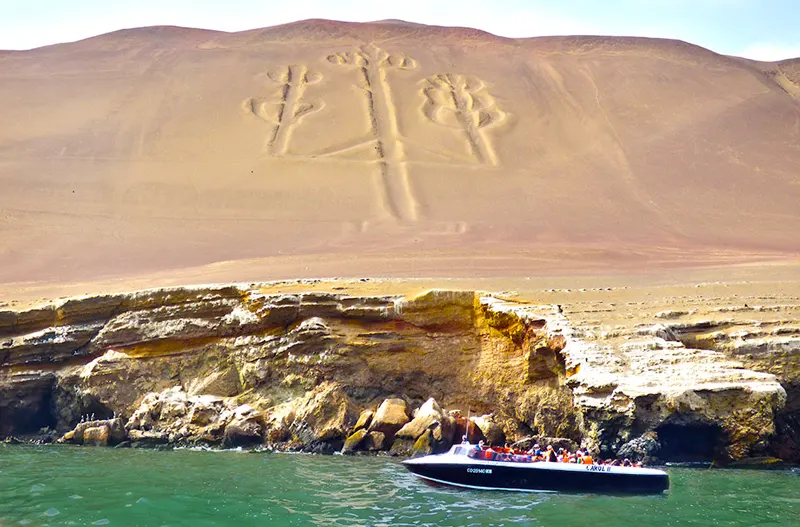
    More than 100 archaeological remains have been found within the reserve, showing how the ancient Peruvians lived in this coastal area, their core activities being the gathering of shellfish and fishing. The legacy given to us by the Paracas were their textiles, considered the finest in the world for the high quality fiber, patterns, colours, weaving technique. They also practiced cranial deformation and perforated skulls. And sailing by the sea you can see the famous geoglyph of El Candelabro (The Candelabra), up to the present it continues to be a mystery in the same way as the enigmatic Nasca Lines, which can only be sighted clearly from an aircraft.

    Cuisine

    Restaurants offer a varied gastronomy with fresh fish and shellfish from the sea. Among these, ceviche, leche de tigre, tiradito, octopus with olive, rice with seafood, jelly fish, among others; the visitor will be amazed.

  • Arequipa

    Arequipa

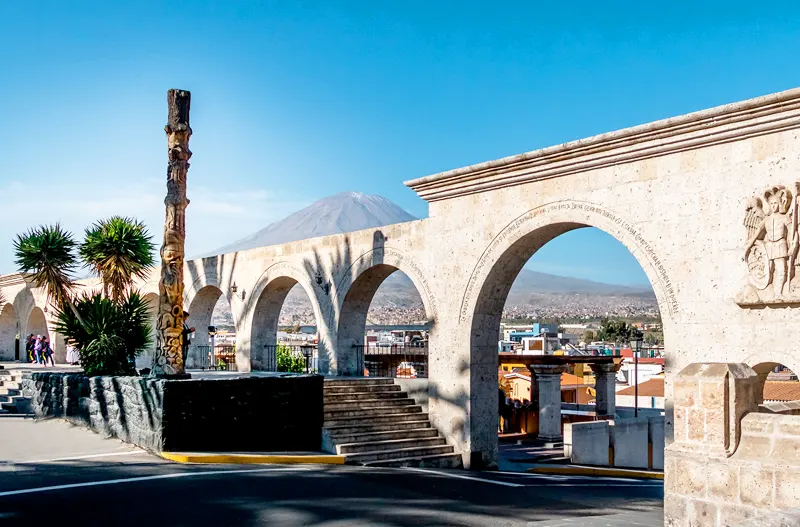
    It is known as the White City for having sillar stone buildings. It was founded in 1540 as the Villa de Nuestra Señora de la Asunta de Arequipa. It has a mostly arid and dry climate all year round, that is why it is also known as the city of the eternal azure sky. Here you can find history, outstanding landscapes, deep canyons, wildlife, art, you can enjoy its rich cuisine and nightlife. Being protected by the magnificent: Misti Volcano.

    WHAT MAKES AREQUIPA SO SPECIAL?


    Natural beauty

    If you wish to get away from the stress of the city, La Campiña looks forward to offering you the best panoramic views. From the Carmen Alto lookout point, you will observe some Inca- built agricultural terraces that are still used as growing areas today. On the other hand; the Yanahuara Mirador, a 19th century construction, it has ashlar stone arches with engravings made by famous figures of the time, from here you can catch lovely views of the Misti volcano and the city. And do not forget to visit the Colca Canyon, considered the deepest canyon in America, it is 4,160 meters deep. It is the ideal location to observe the breathtaking flight of the condor, an emblematic bird with a large size, which can only be spotted in this mountainous zone.

    History and architecture

    Petroglyphs of Toro Muerto; preserves one of the largest samples of cave art in the world, standing out anthropomorphic, zoomorphic, phytomorphic, symbolic figures, probably belongs to the Tertiary Age. Ashlar Route; the ashlar is the base material used in the White City’s architecture, you can observe the extraction process, carving and sculpting of the ashlar, furthermore, it has amazing landscapes in the area. The historic city center has more than 500 houses of European-Andean style, and its streets indicate the colonial art being its main attractions: Santa Catalina Monastery; religious building, inside there is a citadel, it was built to lodge the daughters of the most distinguished families in the city with a religious vocation. Main Square; considered a World Cultural Heritage Site by UNESCO, it is surrounded by portals, the Cathedral, and in the center of the plaza there is a bronze fountain. Compañía de Jesús Temple; belongs to the Jesuit religious order, dating from the seventeenth century, in its interior there are canvases of the Cusco School can be appreciated, as well as altarpieces carved in wood and covered with gold leaf.

    Cuisine

    If you love to dare your palate, you must try the Ocopa Arequipeña; it is a representative entree, another choice is the Solterito de Queso; it consists of a fresh salad where corn, broad beans, cheese, onion, black olives and tomato get together. And as main courses, you can’t miss the Adobo Arequipeño, and the Pastel de Papa con Rocoto Relleno (“Potatoes salad with Stuffed hot pepper”). These flavors will make you feel good and want more.

  • Madre de Dios

    Madre de Dios

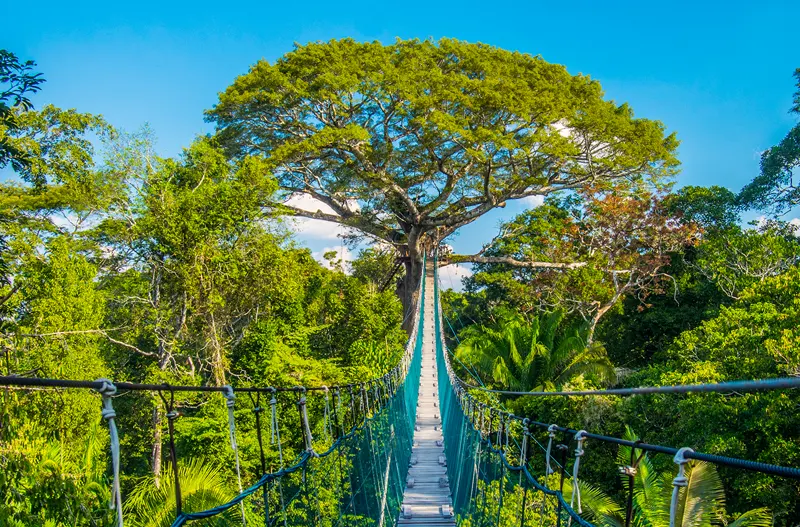
    It is located southeast of the Peruvian territory, is the third largest department, and the least populous, being its capital Puerto Maldonado. Here you will make a mandatory stop before immersing yourself in the tangled forest. Madre de Dios is shelter of more than 50% of the Peru’s biodiversity, throughout its extension we can find a mega diversity of forests, flora, fauna, rivers, and wildlife refuge which are in danger of extinction.

    WHAT MAKES MADRE DE DIOS SO SPECIAL?


    Natural diversity

    Two National Sanctuaries are waiting for you, crammed with nature and exotic destinations. Tambopata National Reserve is the perfect place for all nature lovers, and spreads its richness through its sounds, colors and life. This protected nature reserve has one of the greatest biological diversity. There are 648 bird species, including: the harpy eagle, the razor-billed curassow, among others; 108 species of mammals being the most seen: the river wolf or giant otter, the puma, the howler monkey, the collared peccary, the red brocket deer, among others; 103 species of reptiles, represented by the emerald tree boa, the black caiman, the yellow-spotted river turtles, among others; 323 species of fish, highlights the boquichico (black prochilodus), the zúngaro saltón (kumakuma), the red-bellied pacu, among others. Similarly, there are 1,200 varieties of butterflies, 93 species of amphibians and 1,713 species of trees. It offers a wide range of habitats such as: aguajales (the moriche palm), collpas (clay licks), castañales (brazil nut), terrace forests, riparian forests and lakes in their pristine condition.

    Manu National Park, for its biological diversity was recognized as a Natural World Heritage Site and Core Zone of the Biosphere Reserve. It is a zone that covers different ranges of climates from the frigid highlands that exceed 4000 meters above sea level (13,123 feet) to the lowland rainforest. Here you can find ecosystems lightly touched by humans. Manu is home to a large number of wildlife species. It has registered 160 species of mammals such as the jaguar, the little spotted cat, the tapir; more than 1000 bird species; furthermore, it is estimated that there are 30 million insects, 140 amphibians, 50 species of snakes, 40 species of lizards, 6 turtles, 3 caimans and 210 species of fish. It also protects 10% of the world’s plant species. It is an exceptional place and it is full of mysteries, but, at the same time, you will definitely fall in love with this spot.

    Cultural diversity

    Throughout this protected area there is an enormous cultural wealth represented by its indigenous peoples who preserve their ancestral customs and traditions; others work in agriculture, timber extraction and nut gathering; some native communities live in voluntary isolation.

    Cuisine

    The secret of every journey is to taste the delights of each region. Madre de Dios is characterized by the using of ingredients in the zone such as fruits, fish and bushmeat. So awaken your sense of taste by enjoying these delicious typical dishes such as Patarashca, fish wrapped in bijao leaves and cooked on the grill. Sarapatera de Motelo, made with turtle meat, grated plantain, yucca, and to provide a distinctive flavor, sacha cilantro. Juanes de Gallina, cooked rice with hen meat wrapped in bijao leaves in a bain-marie. Tacacho, made with boiled or fried plantains with cracklings, salt and lard. Asado de picuro, made with picuro meat, parboiled yucca, salad and ají de ojito de pescado (hot pepper), among other traditional dishes from the southeastern jungle of Peru.

  • Puno

    Puno

    Puno, due to its strategic location, presence of Pre Inca, Inca and colonial cultural remains; added to its natural attractions such as the highest navigable lake in the world, Lake Titicaca, rivers, lagoons, jungle, flora, fauna; as well as its magnificent archaeological sites, its colonial temples, its varied folklore, the kindness of its people, and the legend which turned it into the City of the Sacred Lake, makes it a destination that cannot be ignored.

    WHAT MAKES PUNO SO SPECIAL?

    Natural beauty

    The main attraction, which catches the attention of every visitor is Lake Titicaca, located at 3,810 meters above sea level (12,500 feet), considered the highest navigable lake in the world. This water mass is Natural Heritage of Perú, since it maintains the lake’s own natural resources. Here live endemic species of birds, highlighting the Titicaca grebe; on the other hand, fish and amphibians, standing out the Titicaca water frog.  And 12 varieties of aquatic plants excel, being the totora (bulrush) and the llacho. It is the perfect place for those who love nature and bird watching.

    History and customs

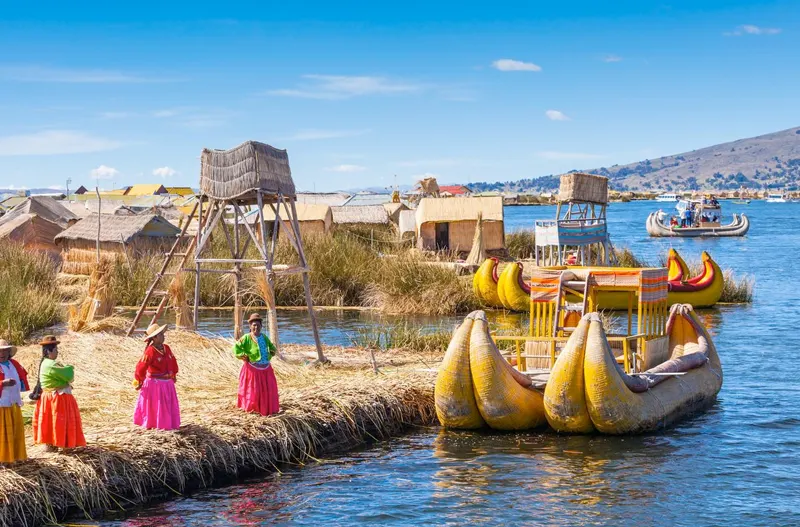
    From time immemorial, this lake has had an impact on the worldview of the Puno population. According to legend, Manco Capac and Mama Ocllo, the founders of the Inca Empire, rose from the waters of Lake Titicaca. Along this mass of water, there are islands where they still maintain the customs of their ancestors. They live in harmony with their environment, and take advantage of the resources that Mother Earth provides. That is why you should visit the Taquile Island, where they make weavings in which they express their experiences and traditions. Amantani Island, is the ideal place to stay and sleep with the ancient inhabitants of the Aymara culture, they work in agriculture, their fields are surrounded by eucalyptus trees and flowers. Uros Island, is a set of artificial floating islands, they use totora reeds to build the ground of their homes, and thus avoid the collapse of the artificial islands. The local people continue to practice fishing on totora reed boats, and also use it for medicinal purposes. There are several archaeological sites that will astonish you, you cannot miss the Archaeological Complex of Sillustani, they are circular towers made of stone, have a height of 12 meters (40 feet) high, were used as funerary mausoleums by the Inca, Colla and Tiahuanaco cultures.

    Cuisine

    If you are in Puno, it is a must to try its local gastronomy. Taste a fried trout, you can accompany it with rice, boiled or french fries.

Belcheri Travel